
Why I-Beam Structure Is More Stable? — ZW Feeder Frame Design Explained
Why I-Beam Structure Is More Stable? — ZW Feeder Frame Design Explained
Meta Description:
Why does the ZW feeder frame use I-beam steel? A practical explanation of the I-beam’s bending and torsional resistance advantages, and how it reduces vibration and extends service life in real-world operation.
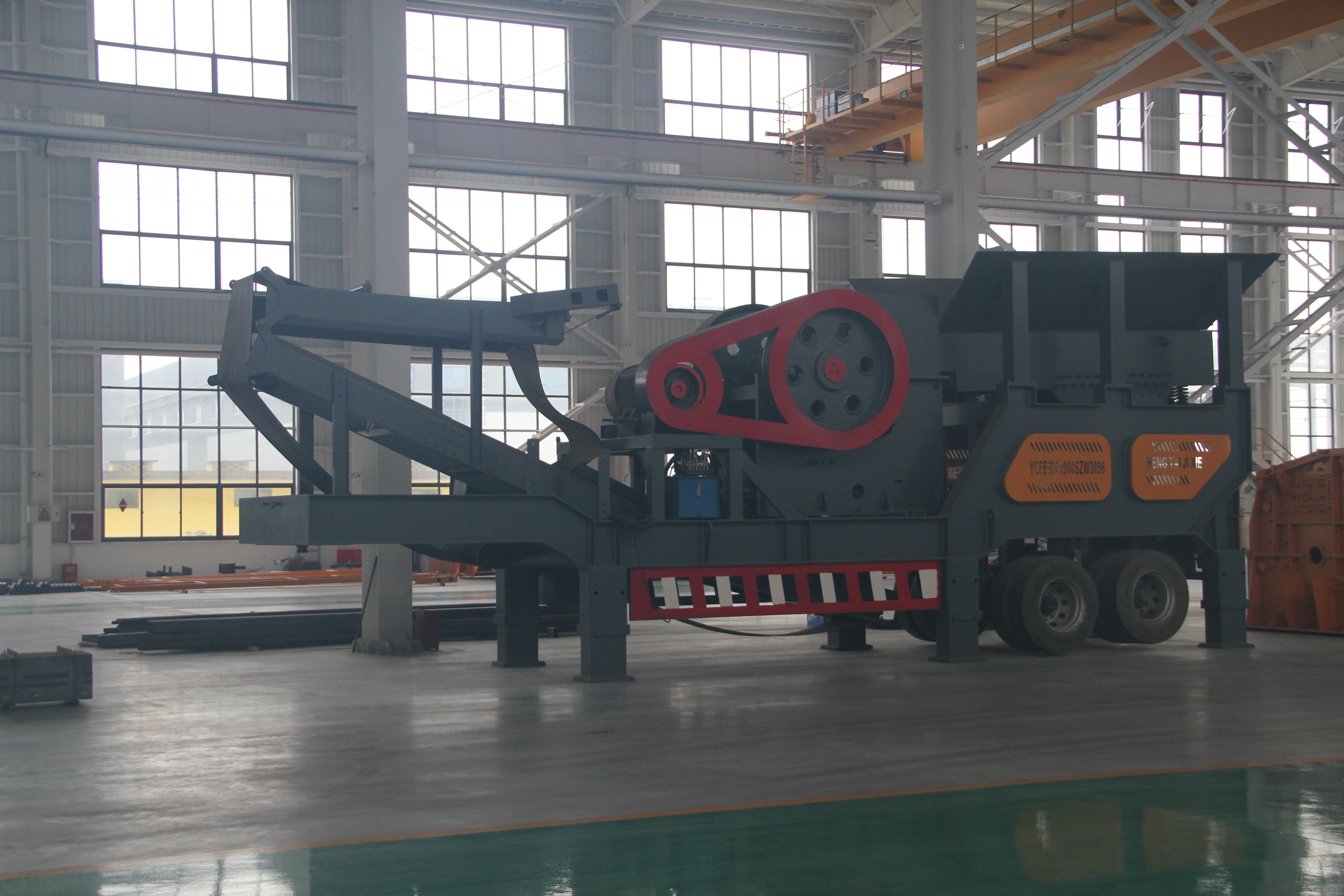
5.1 What Does an I-Beam Look Like? — Steel Shaped Like the Letter “I”
Flange (top and bottom horizontal plates)
    ━━━━━━━━━━━━━━━
         ┃        ← Web (vertical middle plate)
         ┃
    ━━━━━━━━━━━━━━━
    Flange (resists upward and downward bending)
Why Not Make It Solid?
A solid beam would be too heavy and waste material.
An I-beam concentrates material at the top and bottom edges.
This design uses less steel while achieving maximum bending resistance.
In simple terms:
Smarter material distribution equals stronger structural performance.
5.2 Bending Resistance — Resisting Downward Deflection
Everyday Example
Imagine standing in the middle of a flat wooden board.
The board bends under your weight.
Now imagine the board shaped like an I-beam—thicker at the top and bottom, thinner in the middle.
It bends much less.
Application in a Feeder
In a ZW feeder:
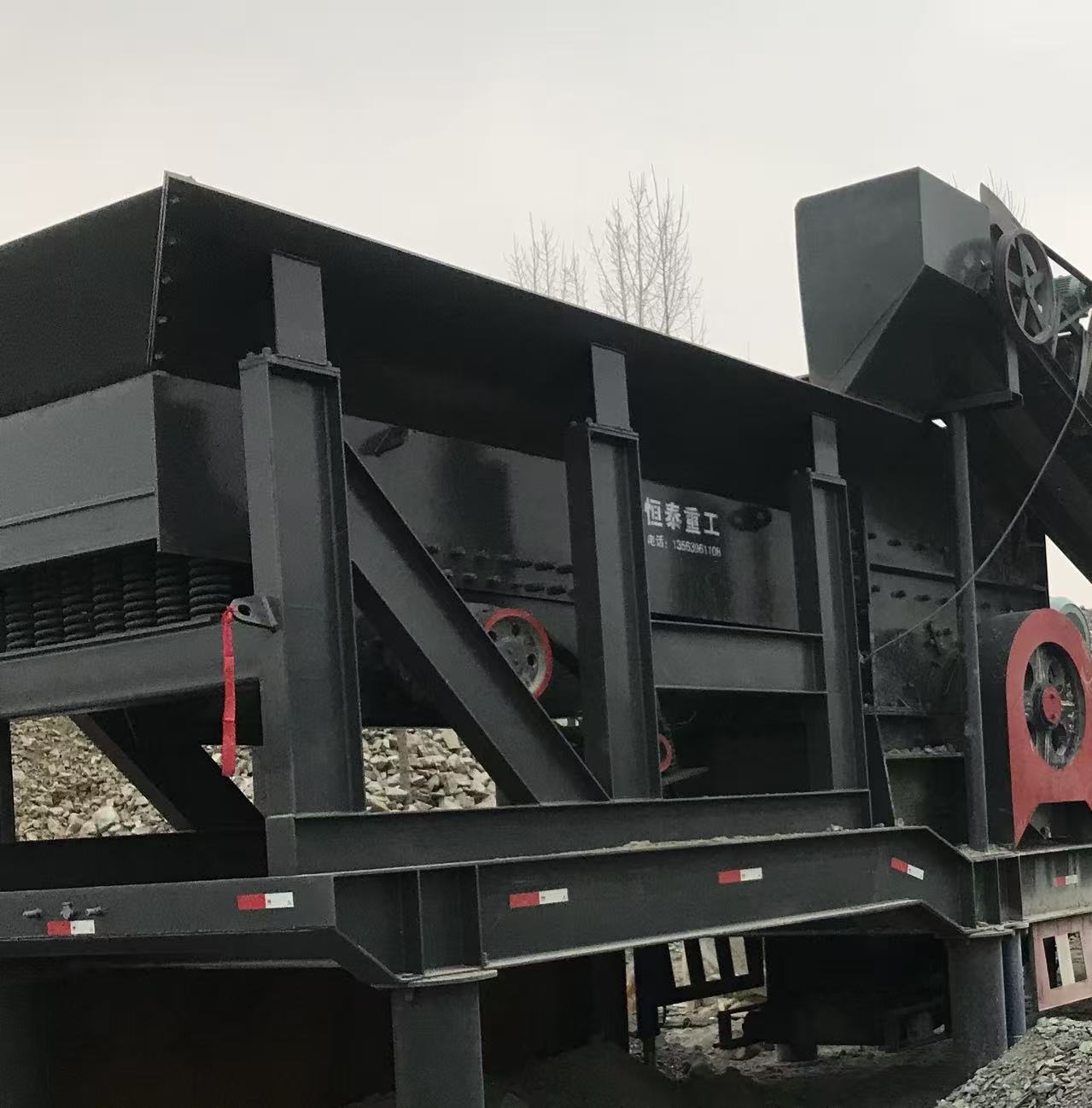
The trough and stones create significant weight.
Vibrations introduce additional impact loads (stones dropping onto the trough).
The frame’s crossbeams must support both static weight and dynamic forces.
An I-beam crossbeam resists bending effectively, keeping the trough straight and ensuring stable feeding performance.
5.3 Torsional Resistance — Resisting Twisting Forces
The Challenge from Dual-Shaft Vibration
Two eccentric shafts rotating in opposite directions generate torque on the frame—similar to twisting a towel.
If the frame is too flexible:
The trough may twist, causing material to drift sideways.
Bearings may experience uneven loading and fail prematurely.
Anchor bolts may loosen.
The entire machine may shift from position.
I-Beam vs. Channel Steel (Open Section)
| Cross Section | Torsional Resistance | Reason | Suitability |
|---|---|---|---|
| Channel Steel (U-shaped) | Poor | Open thin wall, easily deforms under twisting | Not recommended for vibrating equipment |
| I-Beam (Open Section) | Moderate | Provides some resistance, but web may warp | Suitable for small–medium feeders |
| Box / Closed I-Beam | Excellent | Closed section strongly resists twisting | Recommended for large feeders |
Practical Application in ZW Feeders
ZW1032–ZW1542: Welded I-beams, simple and reliable
ZW1742–ZW1945: I-beams combined with end plates to form a box structure for higher torsional strength
5.4 Another Advantage of I-Beams — Easy Counterweight Installation
The Problem
If feeder vibration is excessive and transmitted to the foundation, the workshop may shake.
The Solution
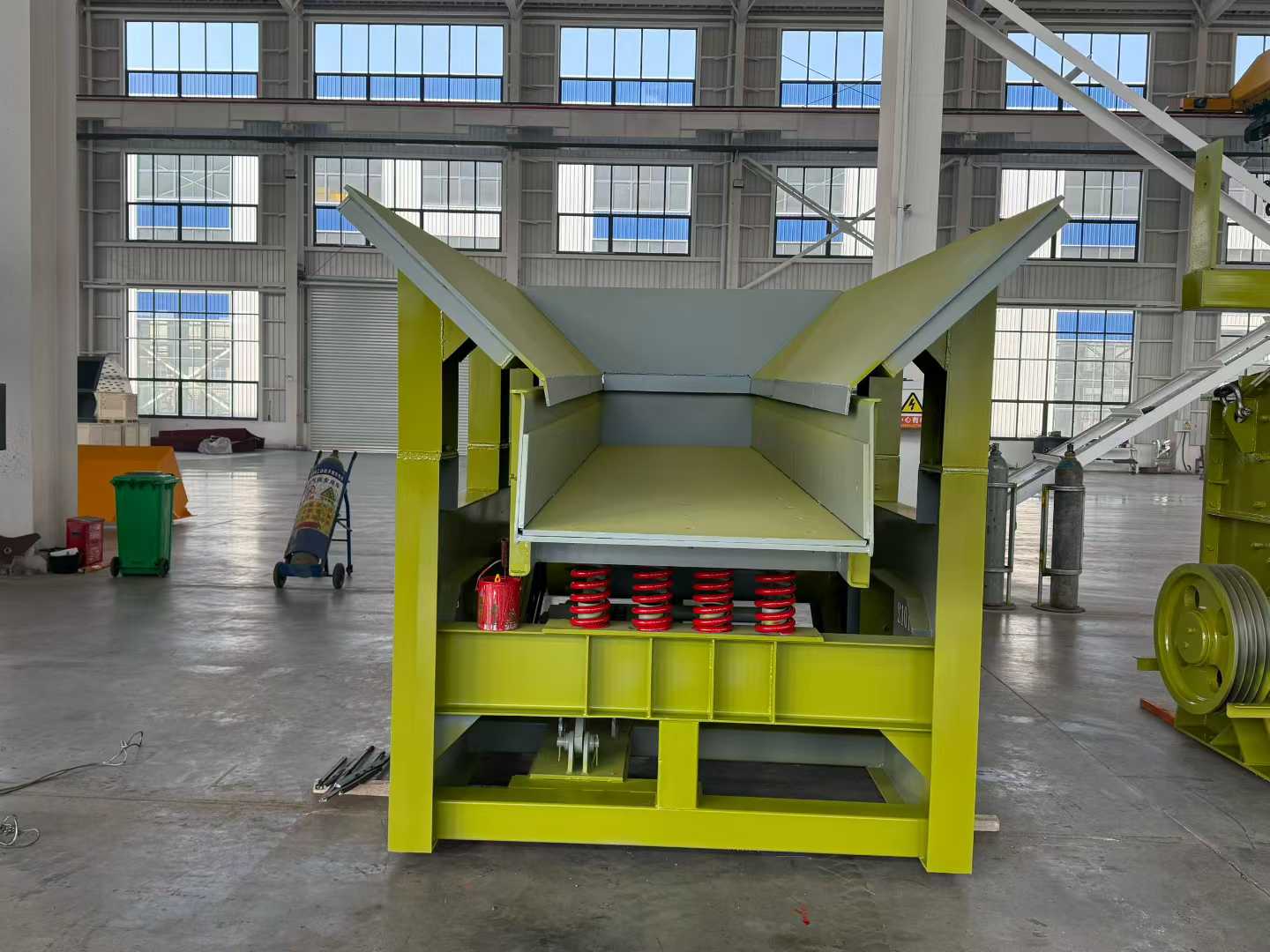
Counterweights (concrete or cast iron blocks) can be installed between the I-beam webs:
━━━━━━━━━━━━━━━
    ┃  Concrete    ┃  ← Adds weight without increasing stiffness
    ┃  Counterweight┃     Makes the machine “heavier” and reduces vibration transmission
    ━━━━━━━━━━━━━━━
The Result
Foundation vibration reduced by more than 50%
Lower building noise
Improved overall machine stability
The machine feels more grounded and less prone to “floating” vibration.
5.5 How to Judge Frame Quality On-Site
| Inspection Item | Good Condition | Poor Condition | Consequence |
|---|---|---|---|
| Welds | Smooth, crack-free | Cracks, especially at flange-web joints | Structural failure |
| Deformation | Straight, no visible bending | Visible bending or twisting | Uneven feeding, bearing damage |
| Anchor Bolts | Tight, no gaps | Loose bolts, displaced washers | Equipment shifting, pipe damage |
| Paint & Coating | Intact, no rust | Peeling paint, rust (especially inside web) | Corrosion, reduced strength |
5.6 Maintenance Recommendations
Routine (Monthly)
Check anchor bolt tightness (vibration naturally loosens bolts).
Inspect weld seams for new cracks, especially near inlet and discharge ends.
Annual Inspection
Measure diagonal distances of the frame—unequal diagonals indicate twisting.
Check for internal corrosion inside the web plates (often overlooked).
Major Overhaul
After 5–6 years, consider reinforcing or replacing key crossbeams.
Do not wait for structural failure—secondary damage can be far more costly.
Conclusion
The I-beam structure is the foundation of the ZW feeder’s stability.
Next Article Preview:
“How to Choose a Motor? Power Configuration Guide for ZW Feeders”